PROteostasis Group of European New InvEstigators (PROGENIE)
Proteostasis
Proteins underlie numerous processes ranging from synthesis, folding, modification, trafficking, to degradation. The correct interplay of these affects is require for proteins to carry out their proper functions in cells. The overall process to keep all these functions in balance is called protein homeostasis (proteostasis). The proteostasis field includes aspects such as chaperones, the ubiquitin-proteasome system, autophagy, and stress responses. In the last years, proteostasis has become of particular interest due its key role in ageing and pathologies ranging from neurodegeneration to cancer.
PROGENIE

A couple of years ago, it became apparent that there is a lack of opportunity for new group leaders to discuss general topics specific to this career stage and to have a forum to discuss their recent results with an opportunity to gain advice from experts from the different areas of proteostasis. The result was the formation of the PROGENIE network (PROteostasis Group of European New InvEstigators). The group came to life with our first meeting of 13 young investigators in November 2017. This first group was largely recruited from the protein folding community and since has been gradually growing in size and scientific focus, now covering a wider part of proteostasis.
Activities
Our main activity is a yearly PROGENIE meeting organized by and for PROGENIE members only. There, everybody has a chance to present their research and to gain feedback (ranging from experimental suggestions to publication strategies), exposure, and to develop collaborations. In additions, we address topics important for new investigators regarding the field, science structures, grant opportunities, and strategies and advise for topics involved in setting up and running a laboratory. Resulting from these discussions, PROGENIE members published guidelines for early-career group leaders (doi:10.15252/embr.201847163).
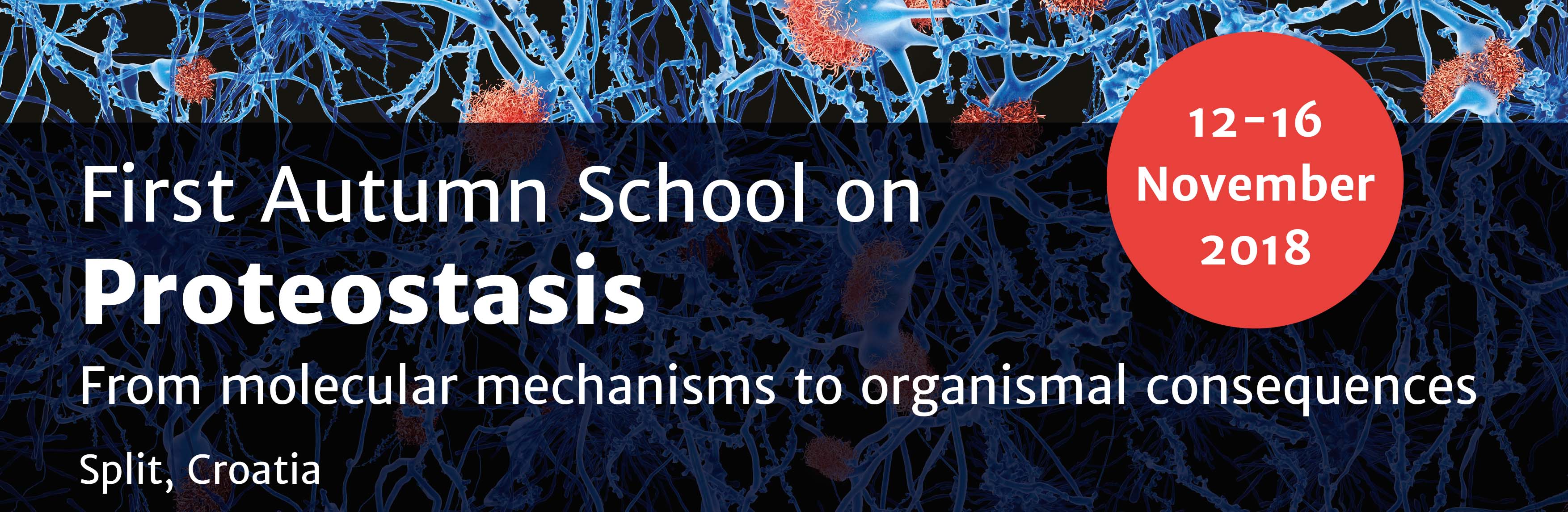
It has become clear that there is a need for training opportunities for graduate students and postdocs in the ever-growing proteostasis field. As a result, in 2018, we initiated a biannual ‘Autumn School on Proteostasis’ with leaders in the proteostasis field and PROGENIE members offering presentations on review-like overviews on different aspects of proteostasis, conference-type updates on current research, as well as career advice. In 2021, the proteostasis school was named ‘Susan Lindquist School on Proteostasis’ in memory of Susan Lindquist, a pioneer and giant in the field. Subsequent proteostasis schools took place in 2023 (Ingelheim am Rhein, Germany) and 2025 (Espoo, Finland).
Since its inception, the school has fostered a positive environment for networking and learning about proteostasis and science more broadly. Its unique and collegial setting offered attendees the opportunity to present their research projects, meet leaders in the field, and receive scientific input. Importantly, since the beginging attendees have been writing a meeting report, which allows them to summarize developments in the field and present it to the entire community. We have been updating the program to reflect changes in this dynamic field, and we are pleased to announce that the next Susan Lindquist School on Proteostasis will take place in October 2027 in Vienna, Austria.
Leadership
PROGENIE is co-chaired by Ayala Shiber, David Balchin and Rahul Samant.
Become a member
We are looking for new investigators located in Europe with a visible track record in the proteostasis field and who are in the beginning of setting up their own laboratories. If you are interested in joining, please send an email to contact.progenie@gmail.com with a short paragraph about you and your research.
Current members
Reid Alderson (Helmholtz Munich, Germany)
Claes Andréasson (Stockholm University, Sweden)
Prince Saforo Amponsah (Kaiserslautern, Germany)
David Balchin (Francis Crick Institute, UK)
Ivana Bjedov (University College London, UK)
Marion Bouchecareilh (University of Bordeaux, CNRS, INSERM, France)
Piotr Bragoszewski (University of Warsaw, Poland)
Matthias Feige (Technical University of Munich, Germany)
Olivier Genest (Aix Marseille University, CNRS, France)
Paolo Grumati (Telethon Institute of Genetics and Medicine, Italy)
David Haselbach (IMP, Vienna, Austria)
Erinc Hallacli (Max Perutz Labs & Medical U of Vienna, Austria)
Aeid Igbaria (BGU, Israel)
Elif Karagoez (Max Perutz Laboratories and Medical University of Vienna, Austria)
Anton Khmelinskii (Institute of Molecular Biology at Mainz, Germany)
Janine Kirstein (University of Bremen, Germany)
Itay Koren (Bar-Ilan U, Israel)
Anita Krisko (University Medical Center Göttingen, Germany)
John Labbadia (UCL,UK)
Maya Maor-Nof (Technion, Israel)
Christian Münch (Goethe University Frankfurt, Germany)
Natalia Rodríguez-Muela (DZNE-Dresden, Germany)
Rina Rosenzweig (Weizmann Institute of Science, Israel)
Adrien Rousseau (MRC-PPU, UK)
Juha Saarikangas (Helsinki U, Finland)
Rahul Samant (Babraham Institute, Cambridge, UK)
Ritwick Sawarkar (MRC and University of Cambridge, UK)
Ruth Scherz-Shouval (Weizmann Institute of Science, Israel)
Anne Schreiber (Francis Crick Institute, UK)
Reut Shalgi (Technion, Israel)
Ayala Shiber (Technion, Israel)
Rebecca Taylor (University of East Anglia, UK)
Katarzyna (Kasia) Tych (Groningen U, Netherlands)
Kathrin Ulrich (Köln U, Germany)
Anne Wentink (Leiden U, Netherlands)
Lidia Wróbel (IIMCB, Poland)